Ekaśhloki Sundarakāṇḍa
The story of Sundara kāṇḍa from Rāmayanam in one shloka
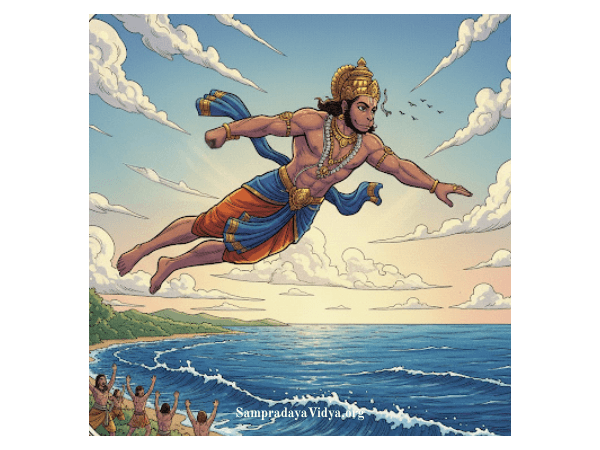
tīrtvā-akṣāra payonidhim kṣaṇam atogatvā
tīrtvā – having crossed, akṣāra – never ending, payo-nidhinim – the ocean, kṣaṇam - in a moment, atah gatvā – having reached there
Having crossed the never ending ocean in a moment

śriyah sannidhim; dattvā-rāghava mudrikā; ma-apa-śucaṃ kṛtvā
śriyah sannidhim - to the presence of Shrī or Goddess Lakshmi (Sita Devi) herself; dattvā rāghava mudrikā – having given her Raghava’s (Rama’s) ring, ma-apa-śucaṃ-kṛtvā – having taken away Sita Devi’s shucham or grief
He entered the presence of Shrī, gave her Rāghava’s ring and took away her grief
After crossing the ocean and searching for her, Hanūmān reached the presence of Shrī or Goddess Lakshmī herself (Sītā Devī); he gave her Rāghava’s (Rāma’s) mudrikā or ring and took away her dukkham or grief.
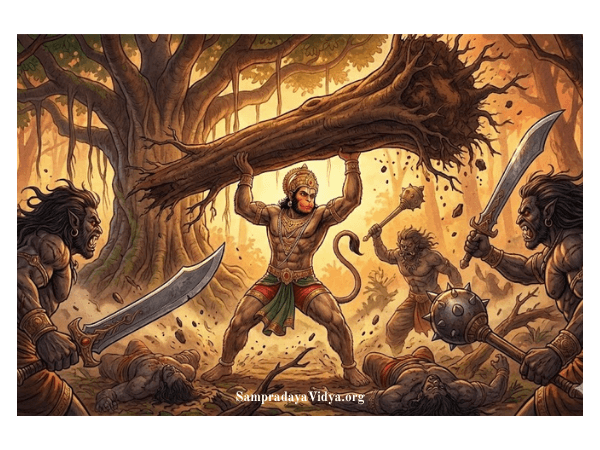
praviśyā-atavīṃ; bhaṅktva-āneka-tarun; nihatya bahulāṃ rakṣogaṇāṃ
praviśya-atavīṃ - entered the forest; bhaṅktvā – having broken; aneka-taruṃ – many trees, nihatya – having killed, bahulāṃ - many, rakṣogaṇāṃ – groups of Rakshasas
He entered the forest. There, having broken many trees, he killed many groups of Rakshasas.
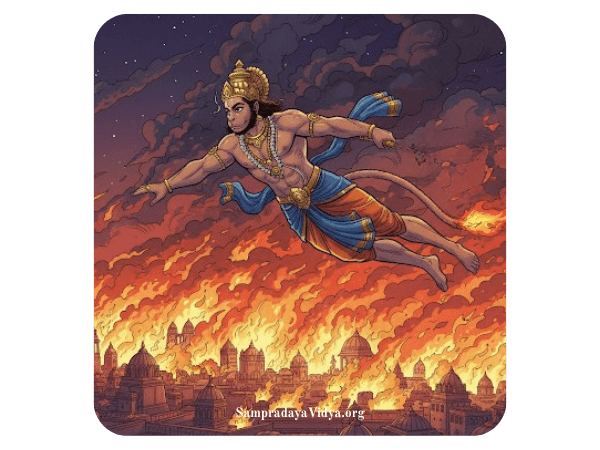
tat-purīm dagdhvā
tat-purīm - that city; dagdhvā - having burnt
He burned that city (of Lanka)
Hanūmān allowed himself to be captured to meet Rāvana and deliver Rāma’s message and warning. In rage, Rāvana ordered Hanūmān’s tail to be set on fire. Hanūmān escaped easily and set most of the city of Lanka on fire with his tail.
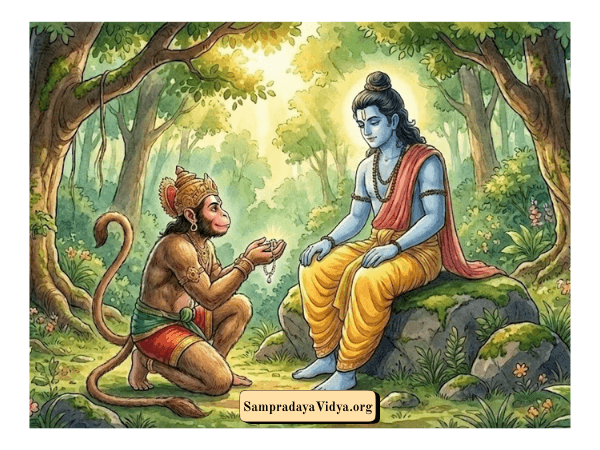
dāyamaṇi raghu-ūdvaham
dāya-maṇi – precious chudamaṇi from Sītā Devīs forehead that she gives Hanūmān to take back to SriRāma, raghu-udvaham – carrying for Rāma
He carried the chudamaṇi back to SriRāma
He went back carrying the precious gem chudamaṇi (ornament from Sītā Devī’s forehead that she gives Hanūmān to take back), to SriRāma.
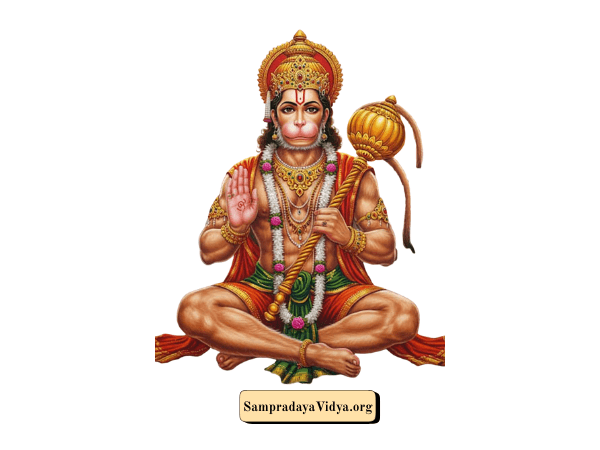
agād vīro hanūmān kapiḥ
agād – in this way he went, vīro hanūmān kapiḥ - the courageous hero kapi or vanara Hanūmān
In this way he went, the brave vanara Hanūmān!