Ekaśloki Shaṅkara-Digvijaya
The story of AdiShankarācharya’s life in one shloka
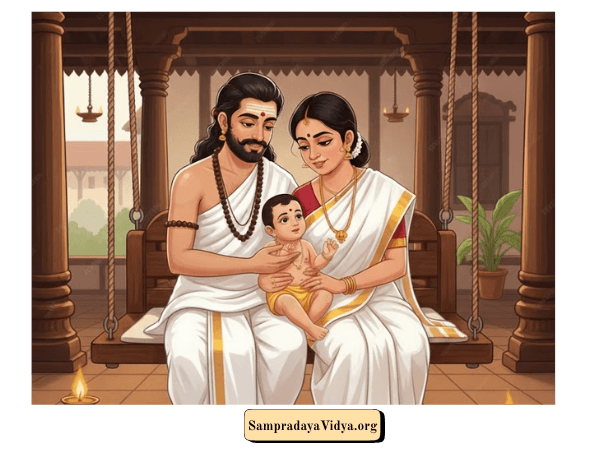
āryāmbā-jaṭhare janiḥ
āryāmbā jaṭhare janiḥ – Born in Aryamba’s womb
Born in Aryamba’s womb.
Adi Shankara was born in Kalady, Kerala in South India to Sivaguru and Aryamba.
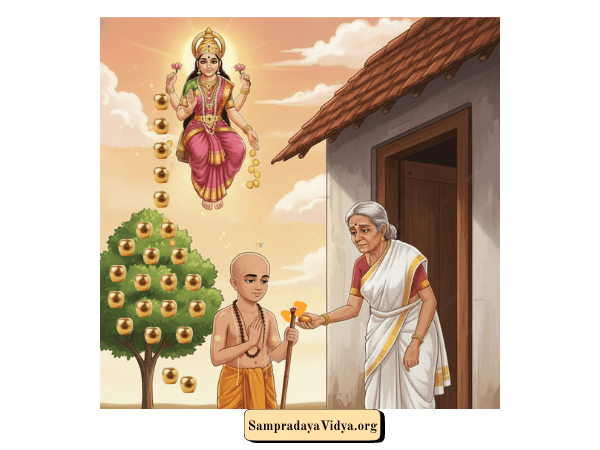
dvija-satī-dāridrya-nirmūlanaṃ
dvija-satī- dāridrya-nirmūlanaṃ – uprooted the poverty of the wife of a dvija Brahmana
He took away the poverty of a poor brahmin woman.
As a small child, Adi Shankara asked for bhiksha from a poor Brahmin woman. With nothing else in her house to give, she gave him a single Amla fruit as bhiksha. Moved by her plight, He sang the Kanakadhara Stotram praising Goddess Lakshmi, who was so pleased with his stuti that she showered a stream of gold Amla fruits on the poor woman’s house. Kanaka is gold; dhara is stream.
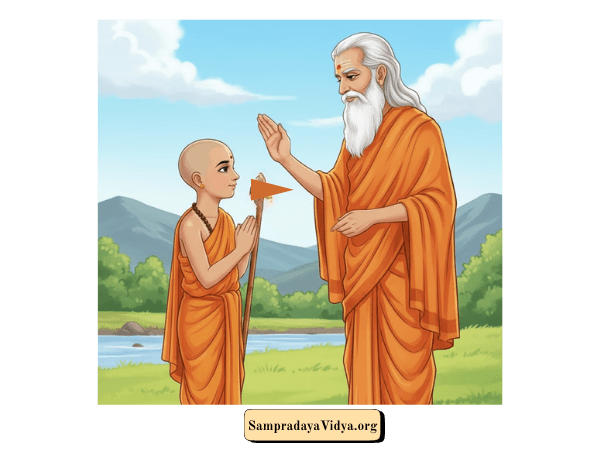
sannyasa-āśrayaṇaṃ guru-upasadanaṃ
sannyāsa + āśrayaṇaṃ – took refuge in Sanyasa, guru + upasadanaṃ – approached a Guru (Shree Govinda Bhagavatpada) with reverence
He took refuge in Sanyasa and approached a Guru with reverence.
He took Sanyasa at a young age, approached the great Advaita Guru Sri Govinda Bhagavatpadacharya with reverence and studied under him.

śrīmaṇḍanāder-jayaḥ
śrīmaṇḍana + ādi + jayaḥ – won over Shree Mandana Mishra and others
He won over Shree Mandana Mishra and others.
He won many debates over other great scholars, the most famous debate was with Sri Mandana Mishra with his wife Ubhaya Bharati Devi as the judge of the debate. Adi Shankaracharya was the amsavatara of Bhagavān Shiva himself. Mandana Mishra is considered as the amsavatara of Chaturmukha Brahma Deva and his wife Ubhaya Bharati Devi as the amsavatara of Jnanam, Saraswati Devi, herself. This debate was one between Shiva and Brahma with Saraswati Devi as the judge. Mandana Mishra later became Adi Shankaracharya’s disciple Sureshwaracharya and Saraswati Devi agreed to Adi Shankaracharya’s request to stay at Sringeri as the Goddess Sharadamba.
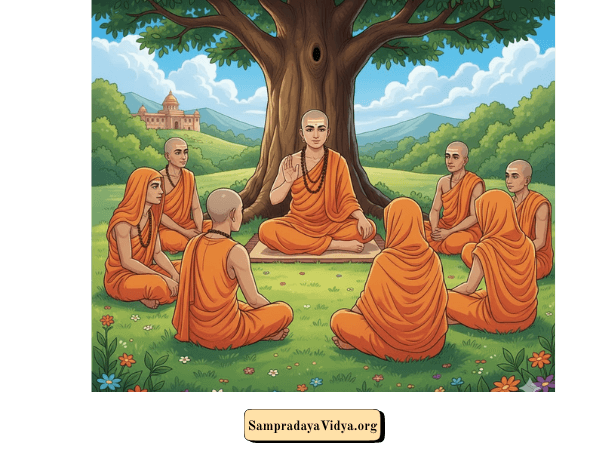
śiṣyaugha-grahaṇaṃ
śiṣya + ogha + grahaṇaṃ – accepted an abundance of disciples
He accepted many disciples.
Adi Shankaracharya accepted many disciples who then became great acharyas and continued to spread knowledge – the most known ones were Padmapadacharya, Sureshwaracharya, Totakacharya and Hastamalakacharya.

subhāṣya-racanaṃ
subhāṣya + racanaṃ – wrote many great bhashyas
He wrote many great bhashyas.
Adi Shankaracharya wrote many bhashyas that serious students study to this day (Bhagavad Gita, Vishnu Sahasranamam, most major Upanishads, Brahma Sutras).

sarvajña-pīṭha-āśrayaḥ
sarvajña-pīṭha-āśrayaḥ – ascended the sarvajna pitha or the throne of all jnanam
He ascended the Sarvajna-pitha or the throne of jnanam.
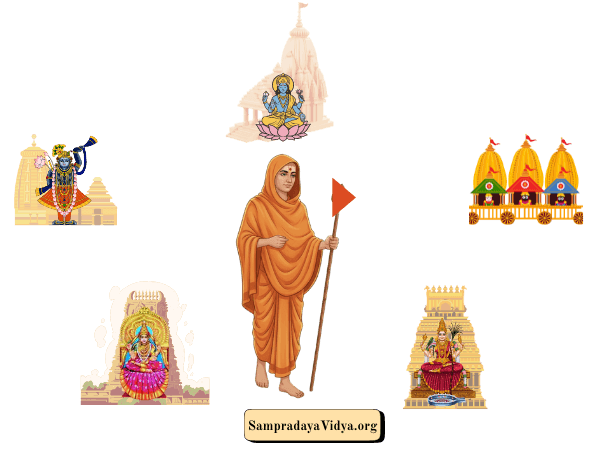
pīṭhānāṃ racaneti saṅgrahamayī
pīṭhānāṃ racaneti saṅgrahamayī – established an order and group of Pithas
He established a group of Pithas to ensure knowledge was spread through out all corners of the country.
He established the four amnaya-peethas in four directions of India - Sringeri (Karnataka in South India), Dwaraka (Gujarat in West India), Puri (Orissa in East India) and Joshimath (Uttarakhand in North India), and the Kanchi Kamakoti peetham in Kanchipuram (Tamil Nadu in South India). He installed his disciples as the gurus for each of these mathas so they could ensure that knowledge was spread throughout all corners of the country through an established Guru parampara. These mathas continue to guide and support dharma and jnana seekers to this day.

saiṣā kathā śāṅkarī
saiṣā kathā śāṅkarī – given here is the story of AdiShankara
Given here is the story of Adi Sankara Bhagavatpadacharya.