Ekaśhloki Mahābhāratam
The story of Veda Vyāsa’s Mahābhāratam in one shloka
ādau pāṇḍava-dhārtarāṣṭra-jananaṃ
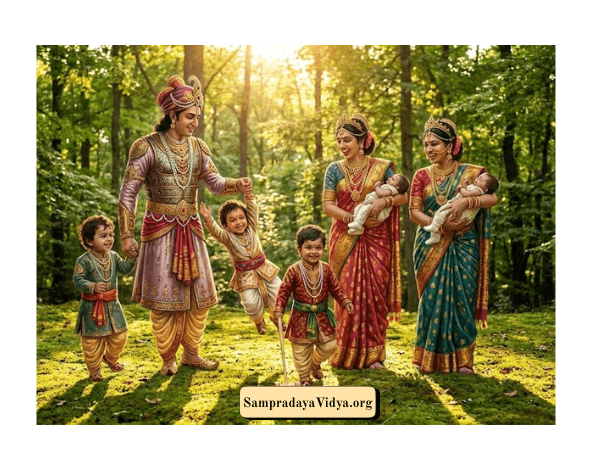
ādau - In the beginning, pāṇḍava-dhārtarāṣṭra-jananaṃ - the Paṇḍavas, the five sons of Paṇḍu and the Dhārtarāṣṭras, the hundred sons of Dhrtarāṣṭra were born.
In the beginning, the Paṇḍavas (the five sons of Paṇḍu), and the Dhārtarāṣṭras (the hundred sons of Dhrtarāṣṭra) were born.

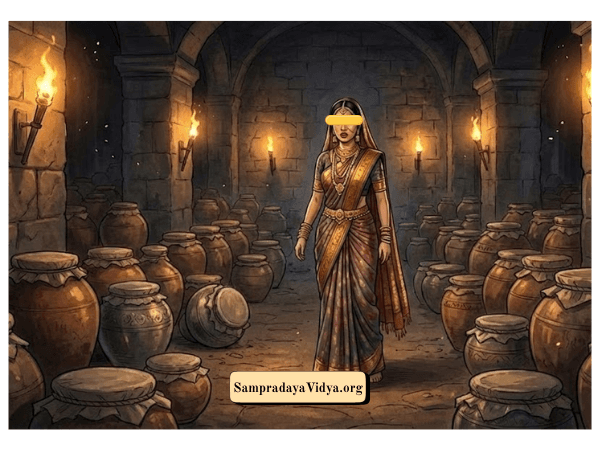
lākṣā-gṛhe-dāhanaṃ
lākṣā-gṛhe-dāhanaṃ - the palace made of wax was burnt.
The wax palace was burnt
The evil Duryoḍhana and his brothers built a palace and offered it as a home to the Paṇḍavas. They had built the palace out of wax and intended to burn them alive in it. Warned of this plot by their uncle Vidurā, the Paṇḍavas built a tunnel and escaped from the burning palace with their mother Kunti.
dyūta-strī-haraṇaṃ
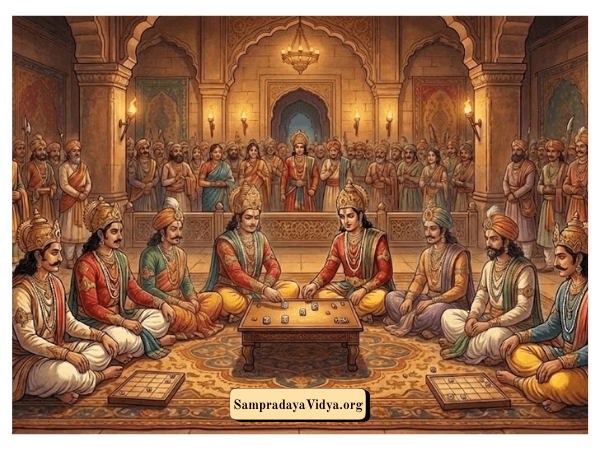
dyūta - in the gambling game, strī-haraṇaṃ - Draupadi was seized or pulled forcefully.
In the gambing game, a woman was seized.
A disastrous gambling match between the Paṇḍavas and the Dhārtarāṣṭras leads to the Paṇḍavas losing everything and the insult of Draupadi Devi, when she was pulled forcefully in the court. Her trust and bhakti or devotion in Lord Krishna protects her.
vane-viharaṇaṃ
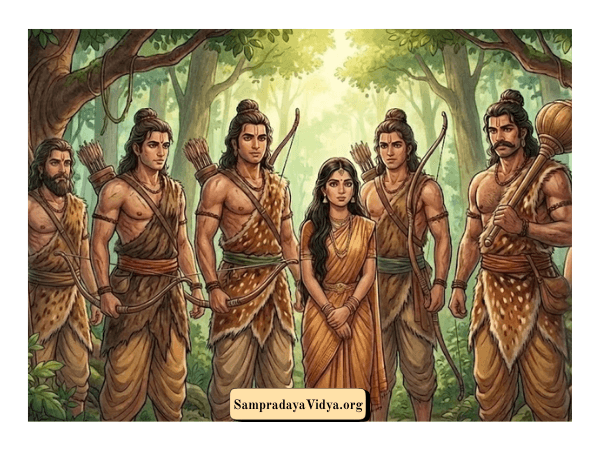
vane-viharaṇaṃ - they roamed in the forest during their vanavāsa
They roamed the forests
The Paṇḍavas with Draupadi Devi walked through and lived in the forests during their 12 years of vānavāsa (forest exile).
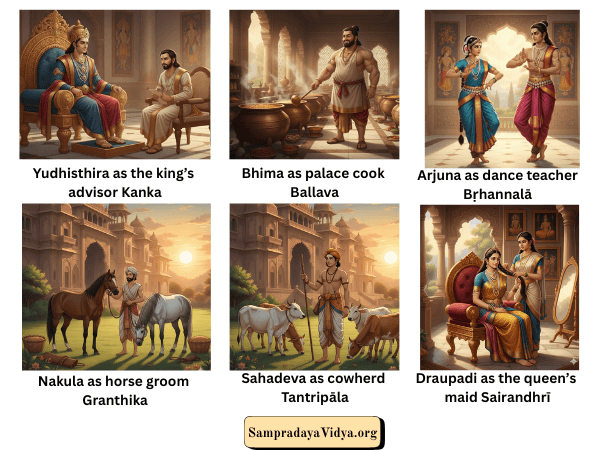
matsyālaye-vartanaṃ
matsyālaye-vartanaṃ - living in Virata Raja’s Matsya kingdom
Lived in the Matsya kingdom
During their 13th or final year of exile, the Paṇḍavas are required to live in 1 year of ajñātavāsa (living in disguise). If discovered, they would have to repeat all 13 years of exile again. They choose to live under different names and roles in Virata Raja’s Matsya kingdom. Yudhiṣṭhira served King Virāṭa as the king’s advisor Kanka. Bhīma worked as the palace cook Ballava. Arjuna as the dance teacher Bṛhannalā, who taught Princess Uttarā. Nakula tended the royal horses as Granthika, and Sahadeva cared for the cattle as Tantripāla. Draupadī served Queen Sudhīshnā as her maid Sairandhrī.
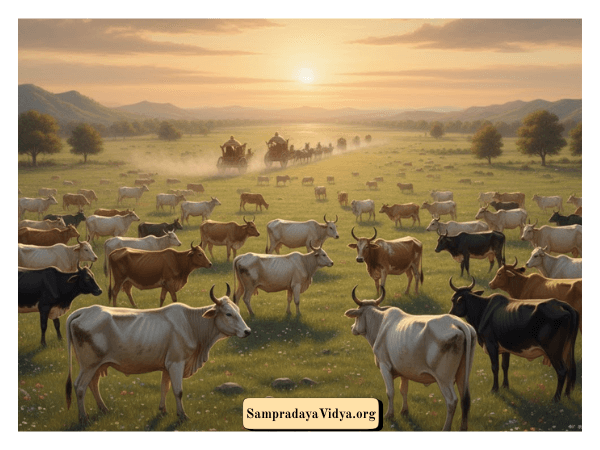
līlā–go–grahaṇam
līlā–go–grahaṇam - the story of the stealing of the cows
The cows were stolen
During the Pāṇḍavas’ ajñātavāsa in the Matsya kingdom, Duryodhana’s army raided King Virāṭa’s cattle to expose their disguise.
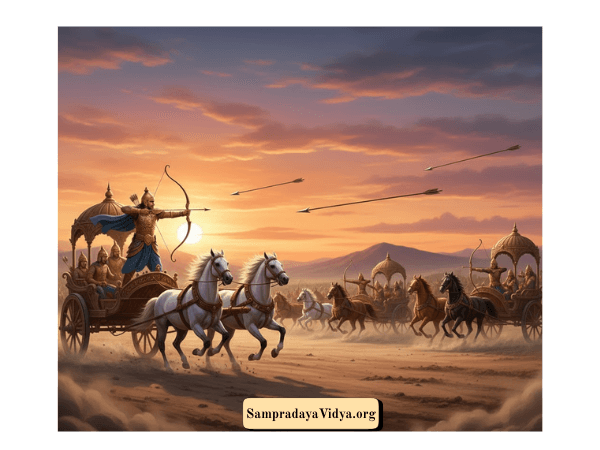
raṇe ca vijayam
raṇe ca vijayam - victory in the battle
Victory in the battle
To recover the stolen cattle, Arjuna, still in disguise as Bṛhannalā, encouraged the Matsya prince Uttara Kumāra in battle against the Kaurava army, defeated them single-handedly and recovered the cows. Just as their final year of exile was completed, the Pāṇḍavas were able to reveal themselves.
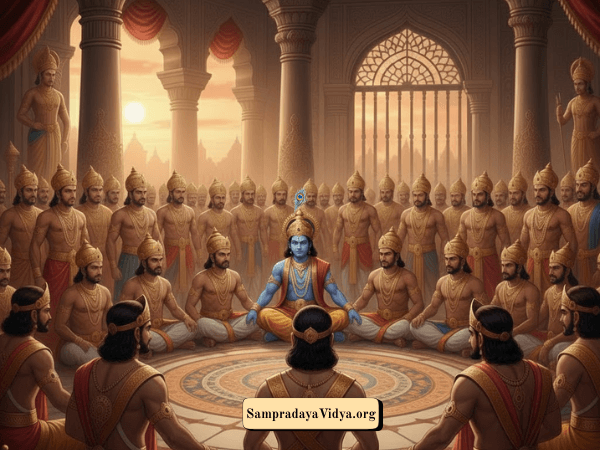
sandhi-kriyā-jṛmbhaṇaṃ
sandhi-kriyā-jṛmbhaṇaṃ - the carrying out of the peace talks
Peace talks were held
After the Pāṇḍavas completed their exile, Bhagavān Krishna attempted to negotiate peace talks with the Kauravas, asking for a small portion of only 5 villages for the Pāṇḍavas instead of the entire kingdom, as a way to avoid a gigantic war. When the Kauravas refused to give them anything, war became inevitable.
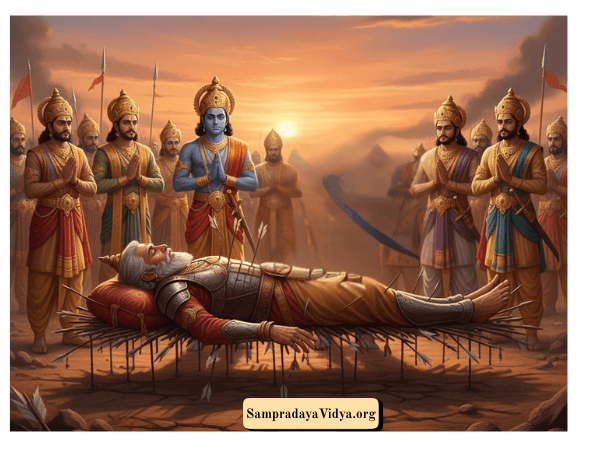
paścād-bhīṣma
paścād-bhīṣma - after that the great warrior Bhīṣma was felled
After that Bhishma
Bhīṣma Pitāmaha had to fight on Duryodhana and armies in spite of their adharma. He was felled during the war first but chose to lie on the battlefield on a bed of arrows to wait for Uttarayanam to gain moksha.

suyodhanādi-hananaṃ
suyodhana ādi hananaṃ - the killing of Duryodhana and others
And Duryodhana and others were defeated
Bhīma and Duryodhana fight with gadās or maces with Bhagavān Krishna, and Duryodhana is finally defeated. Others fighting on Duryodhana’s side are also killed.

yetan-mahābhāratam
etat - this is; mahābhāratam
This is Mahābhāratam
This is the great story of the Mahābhārata, also called the panchama Veda, authored by Veda Vyāsa and scribed by Lord Ganesha.