Ekaśloki Bhagavad Gītā
Bhagavad Gītā in one shloka
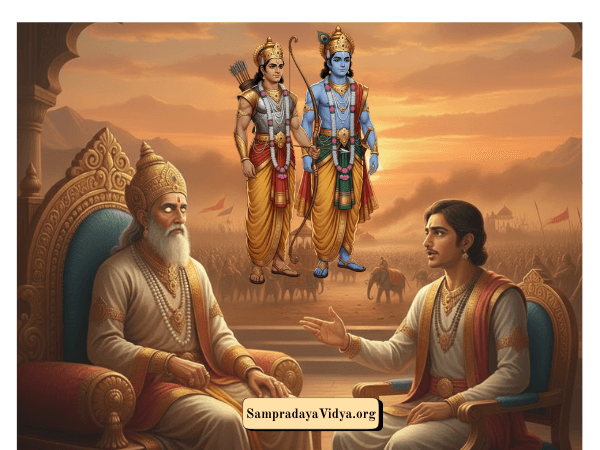
yatra yogeśvaraḥ kṛṣṇo yatra pārtho dhanurdharaḥ.
tatra śrīr-vijayo-bhūtir-dhruvā-nītir matir mama..
yatra - where, yogeśvaraḥ-kṛṣṇo - kṛṣṇa, the Lord of all Yogis, yatra - where, pārtho - Partha or Arjuna, dhanur-dharaḥ - who holds the dhanus or bow. tatra - there, śrīr - wealth and auspiciousness, vijayo - victory, bhūtir - prosperity, dhruvā-nītir - steady and unchangeable morals/ethics, matir-mama - that is my belief.
Where Kṛṣṇa, the Lord of all Yogis, and Partha, the archer, are there, all wealth, victory, prosperity and firm morals or dharma will be there. That is my belief.
In the last shloka of Bhagavad Gita (18th chapter 78th shloka), Sanjaya (who has been given divya-drshti or divine vision to see what is happening at Kurukshetra) says to the blind king Dhrtarāṣṭra, who is only worried about his sons led by the evil Duryodhana that where Bhagavān Krishna and Arjuna are is where wealth, victory, prosperity and dharma are always there.
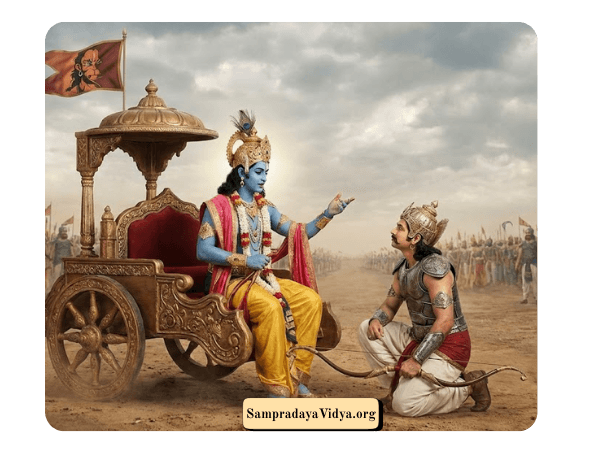
pārthāya-pratibodhitāṃ bhagavatā-nārāyaṇena-svayam
pārthāya pratibodhitāṃ – Partha or Arjuna was taught or instructed; bhagavata nārāyaṇena svayaṃ – by Bhagavān Krishna, the avatara of Bhagavān Nārayana himself
Partha was instructed by Nārayana himself
Arjuna was instructed in the Bhagavad Gītā by none other than Bhagavān Krishna, the avatara of Bhagavān Nārayana himself.

vyāsena-grathitāṃ-purāṇa-muninā madhye-mahābhāratam
vyāsena-grathitāṃ - written by Veda Vyāsa, purāṇa-muninā - the great muni or sage who wrote all the Puranas, madhye-mahābhāratam - in the middle of the itihasa Mahābhārata
Written by Vyasa, who wrote the Puranas, in the middle of the itihasa Mahābhārata
In the middle of Mahabharata, authored by the great muni or sage who wrote all the Puranas, Veda Vyasa, himself.
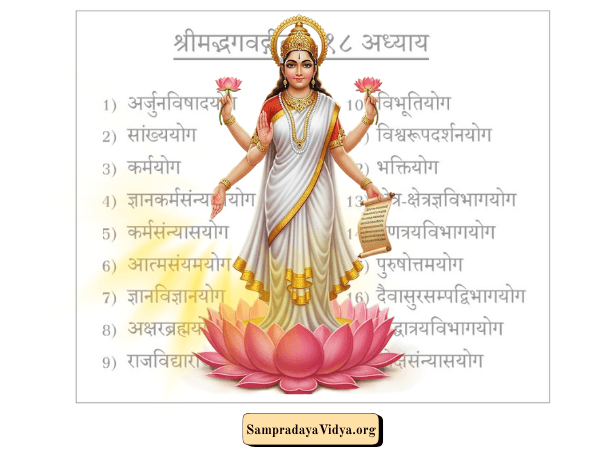
advaitā-amṛta-varṣiṇīṃ-bhagavatīm aṣṭādaśā-adhyāyinīm
bhagavatīm - Goddess Bhagavati (Bhagavad Gītā), advaitā-amṛta-varṣiṇīṃ - who showers the rain of Advaita amrutam (nectar of immortality or Atma-jnanam), aṣṭā daśa-adhyāyinīṃ – the Goddess with 18 adhyayas or chapters
Goddess Bhagavati who showers Advaita amrutam
Here, we pray to Bhagavad Gītā as a Goddess Bhagavati, who showersadvaita amrutam (the nectar of moksham, Atma-jnanam) through her aṣṭādaśa adhyāyas or 18 adhyayas (chapters).
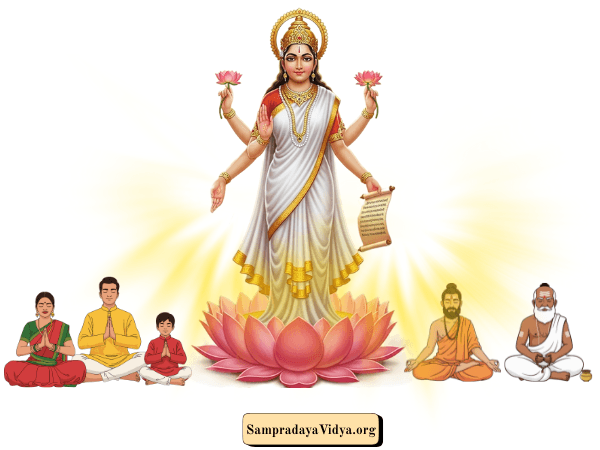
amba-tvām-anusandadhāmi bhagavad-gīte bhava-dveṣiṇīm
amba-tvām bhagavad-gīte – Oh Mother Bhagavad Gītā, on you; anusandadhāmi – I meditate, bhava-dveṣiṇīm - destroyer of ties to the world or samsara
O Mother Bhagavad Gītā, I meditate on you, the destroyer of attachment to samsara
Here, we envision Bhagavad Gītā as a mother. I meditate on her as a Mother who destroys my attachment and bondage with samsara or the world.