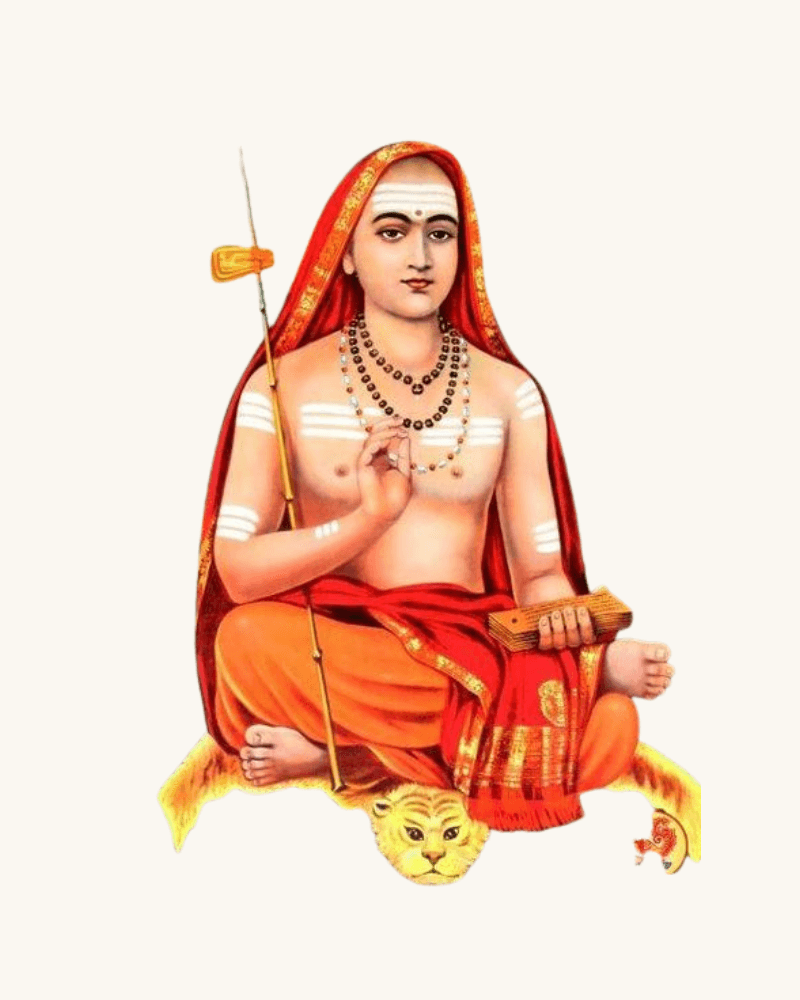
गुरु वन्दन श्लोकाः - guru vandana ślokāḥ
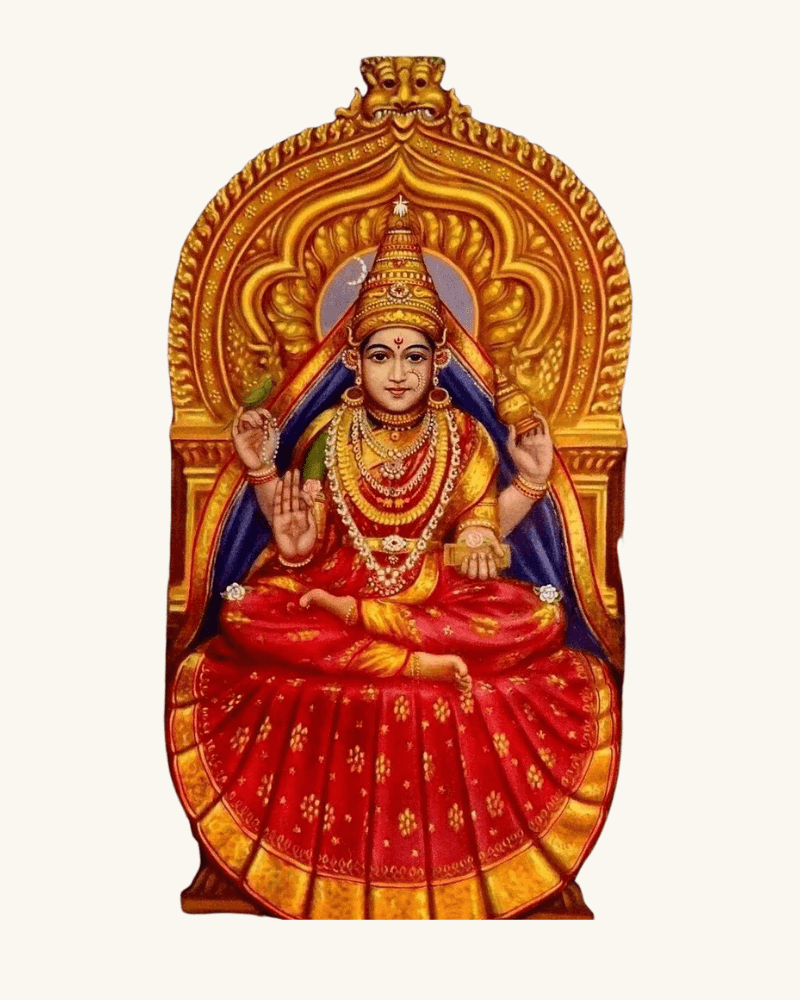
Pray to Śāradā Devī for Her Gentle Presence and Blessings
शारदा शारदा-अम्भोज-वदना वदना-अम्भुजे ।
सर्वदा सर्वदा-अस्माकं सन्निधिं सन्निधिं क्रियात् ॥
śāradā śāradā-ambhoja-vadanā vadanā-ambhuje |
sarvadā sarvadā-asmākaṃ sannidhiṃ sannidhiṃ kriyāt ||
śāradā – Goddess Śāradā (Sarasvatī); śāradā-ambhoja – autumn lotus; vadanā – whose face; vadanā-ambhuje – O lotus-faced one; sarvadā – always; asmākam – for us; sannidhim – presence, nearness; kriyāt – may she grant.
O Goddess Śāradā, whose face is like an autumn lotus, O lotus-faced one, may you always grant us your sannidhi or nearness and presence.
This verse asks Sarasvatī (Śāradā) to stay close to us always. Her “lotus-face” means a face that is calm, bright, and gentle—just like a lotus that opens beautifully in autumn.
Honor Śaṅkarācārya as the Compassionate, Eternal Teacher
कामाक्षीं करुणारूपां कामकोटि-जगद्गुरुम् ।
चिन्मूर्तिं कलये चित्ते शङ्कराचार्यमव्ययम् ॥
kāmākṣīṃ karuṇā-rūpāṃ kāmakoṭi-jagad-gurum |
cinmūrtiṃ kalaye citte śaṅkarācāryam avyayam ||
kāmākṣīm – Goddess Kāmākṣī; karuṇā-rūpām – whose nature is compassion; kāmakoṭi-jagad-gurum – the world-teacher associated with the Kāmakoṭi seat; cin-mūrtim – the embodiment of pure consciousness; kalaye – I meditate upon, hold in my mind; citte – in my heart-mind; śaṅkarācāryam – Śaṅkarācārya; avyayam – eternal, imperishable.
In my heart, I meditate upon the eternal Śaṅkarācārya, the embodiment of pure consciousness, filled with compassion like Goddess Kāmākṣī and honored as the Jagadguru of the Kañchi Kāmakoṭi pīthaṃ.
This verse teaches that Śaṅkarācārya is remembered as wise, gentle, and full of compassion, qualities also seen in Goddess Kāmākṣī. Meditating on such a teacher in our heart helps us stay calm, thoughtful, and kind.

Revere the Guru Paramparā from Sadāśiva to Our Own Teacher
सदाशिवसमारम्भां शङ्कराचार्यमध्यमाम् ।
अस्मदाचार्यपर्यन्तां वन्दे गुरु-परम्पराम् ॥
sadāśiva-samārambhāṃ śaṅkarācārya-madhyamām |
asmad-ācārya-paryantāṃ vande guru-paramparām ||
sadāśiva-samārambhām – beginning with Sadāśiva; śaṅkarācārya-madhyamām – with Śaṅkarācārya in the middle; asmat-ācārya-paryantām – extending up to my own teacher; vande – I bow to; guru-paramparām – the lineage of all Gurus.
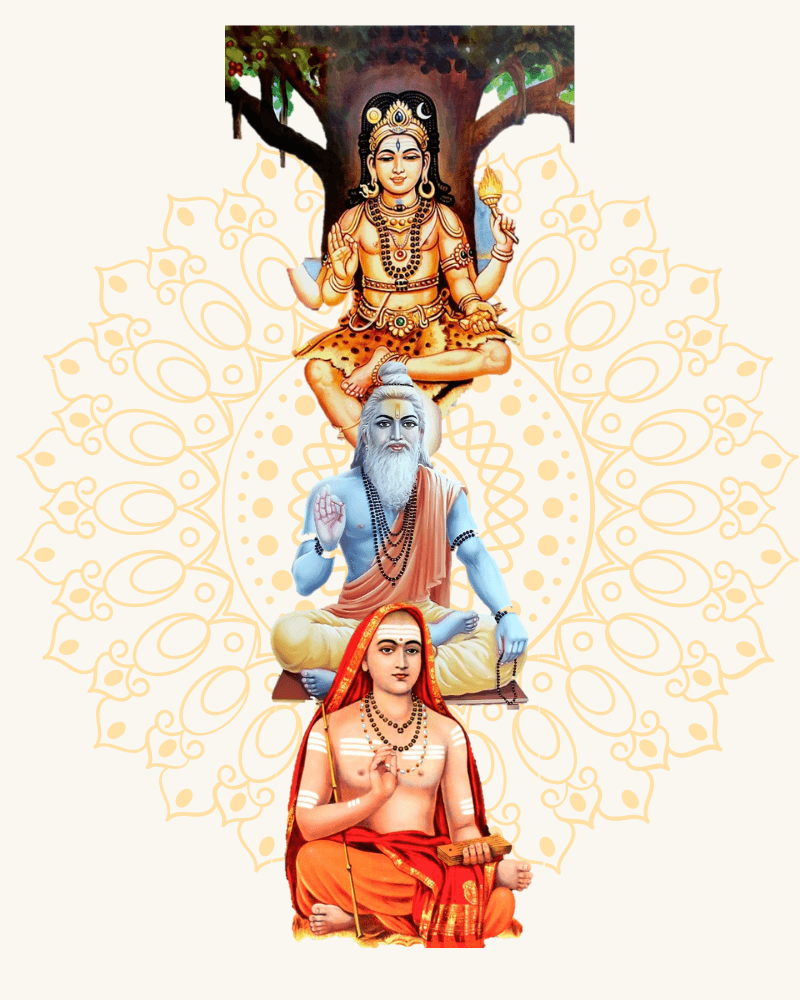
Beginning with Sadāśiva, continuing through Śaṅkarācārya, and extending up to my own teacher, I bow to the entire Guru Paramparā.
This verse reminds us that wisdom is passed from teacher to teacher through many generations. When we respect our own teacher, we also honor all the great teachers who came before.
Honor Dakṣiणामूर्तिः, the First Teacher of All Knowledge
गुरवे सर्वलोकानां भिषजे भव-रोगिणाम् ।
निधये सर्वविद्यानां दक्षिणामूर्तये नमः ॥
gurave sarva-lokānāṃ bhiṣaje bhava-rogiṇām |
nidhaye sarva-vidyānāṃ dakṣiणāmूर्तये namaḥ ||
gurave – to the Guru; sarva-lokānām – of all the worlds; bhiṣaje – to the doctor, healer; bhava-rogiṇām – of those afflicted by worldly suffering; nidhaye – to the treasure, source; sarva-vidyānām – of all knowledge; dakṣiणāmूर्तये – to Dakṣiणामूर्तिः; namaḥ – salutations.
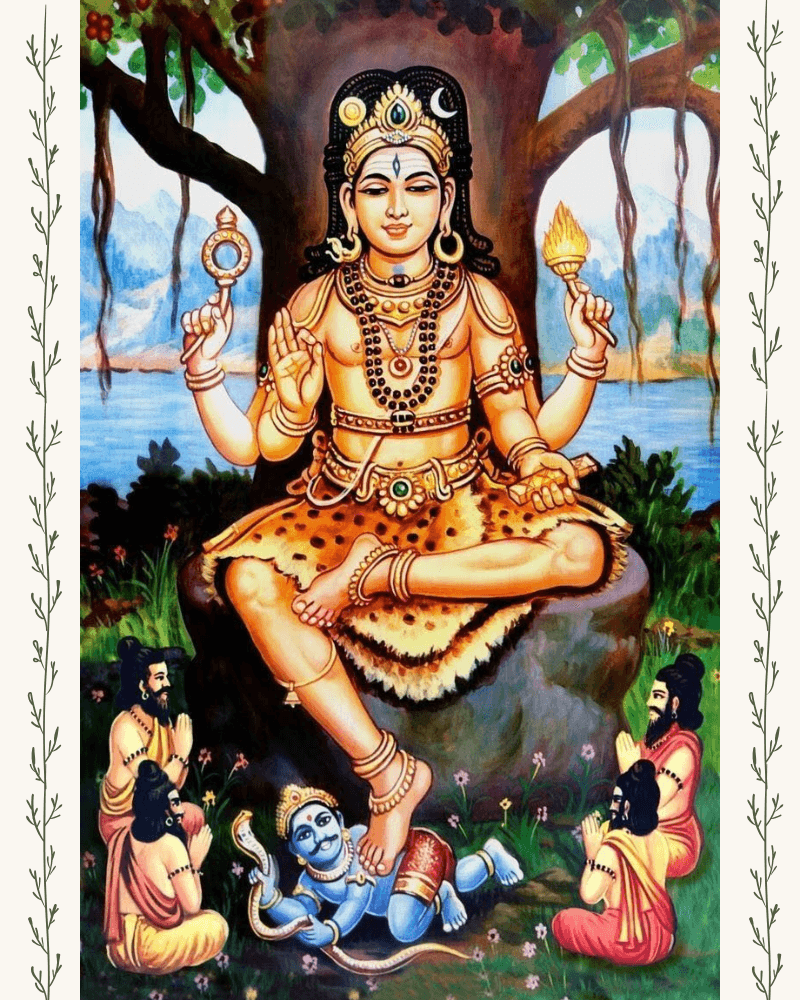
I salute Dakṣiणामूर्तिः, the Guru of all the worlds, the healer of the suffering caused by samsara or worldly life, and the treasure-house of all knowledge.
Dakṣiणामूर्तिः is revered as the first Guru, the original teacher who gives knowledge through silence and steady awareness. His four main disciples are the Sanatkumāras, the eternally young sages. He sits beneath a banyan tree, symbolizing shelter and wisdom, and under his foot lies Apasmara, the forgetfulness and confusion he removes. Children can see him as the calm guide who keeps their minds clear and steady.
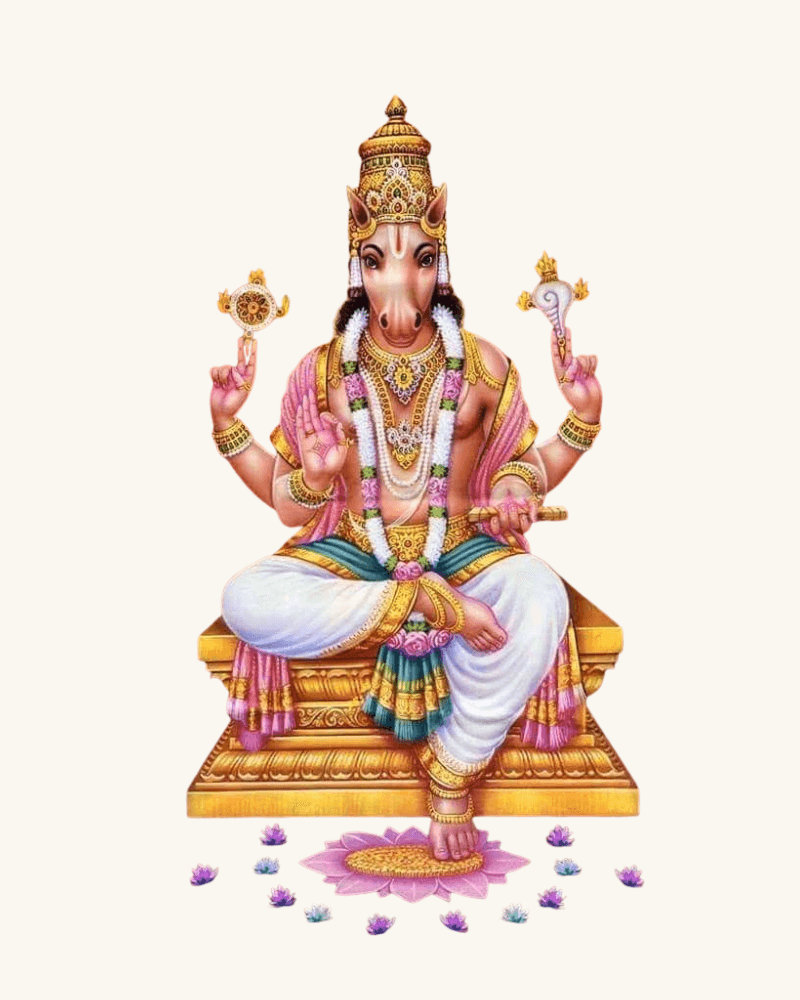
Pray to Hayagrīva for Clarity and Knowledge
ज्ञानानन्दमयं देवं निर्मलस्फटिकाकृतिम् ।
आधारं सर्वविद्यानां हयग्रीवं उपास्महे ॥
jñānānanda-mayaṃ devaṃ nirmala-sphaṭikā-kṛtim |
ādhāraṃ sarva-vidyānāṃ hayagrīvaṃ upāsmahe ||
jñāna-ānanda-mayam – filled with the bliss of knowledge; devam – the divine one; nirmala-sphaṭika-ākṛtim – whose form is pure and clear like crystal; ādhāram – the support, foundation; sarva-vidyānām – of all knowledge; hayagrīvam – Lord Hayagrīva; upāsmahe – we worship/meditate upon.
We worship Lord Hayagrīva, the divine form filled with the bliss of knowledge, pure and clear like a crystal, and the foundation of all learning.
Hayagrīva is the jñāna–avatāra of Viṣ्णु, known for giving clarity, memory, and deep understanding. He rescued the Vedas when they were lost, restoring knowledge to the world. His form—human body with a radiant horse’s head—symbolizes pure intelligence, strength, and the power of sound. Children can see him as the bright guide who protects learning and helps them understand, remember, and speak with confidence.
Learn from Dattātreya, the Teacher Who Unites All Wisdom
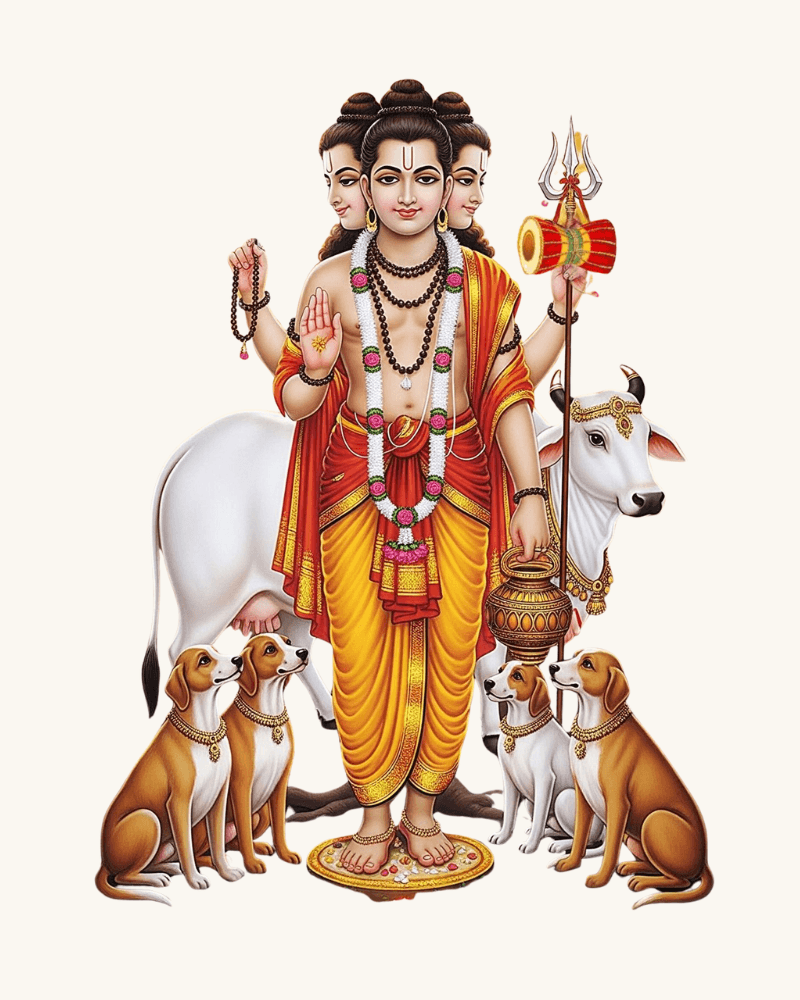
मालां कुण्डीं च डमरुं शूलं शङ्खं सुदर्शनम् ।
दधाने भक्तवरदं दत्तात्रेयम् अहं भजे ॥
mālāṃ kuṇḍīṃ ca ḍamaruṃ śūlaṃ śaṅkhaṃ sudarśanam |
dadhāne bhakta-varadaṃ dattātreyam ahaṃ bhaje ||
mālāṃ – rosary (akṣamālā); kuṇḍīm – water pot; ḍamarum – drum; śūlam – trident; śaṅkham – conch; sudarśanam – discus; dadhāne – holding; bhakta–varadam – giver of boons to devotees; dattātreyam – Lord Dattātreya; ahaṃ bhaje – I worship.
I worship Lord Dattātreya, who holds the rosary and water pot of Brahmā, the drum and trident of Śiva, and the conch and discus of Viṣ्णु, and who blesses his devotees.
Dattātreya is a special Ishwara rūpam who combines the qualities of Brahmā, Viṣ्णु, and Śiva. He is born as the son of Atri Maharṣi and Anasūyā, a couple known for purity and devotion. Because of Anasūyā’s great strength and goodness, the Trimūrti blessed her by taking birth together as Dattātreya.
He is often shown with a calm smile, three heads, six hands carrying the symbols of the three deities, and four friendly dogs nearby representing the four Vedas. A cow stands behind him, showing that nature and the Earth always support a pure and steady mind.
Dattātreya teaches through simplicity. One famous teaching is that he learned from 24 different “gurus”—things in nature like the sun, the river, the tree, and even the earth—because he saw wisdom everywhere.
Honor Krishna, the Protector and Teacher of the World
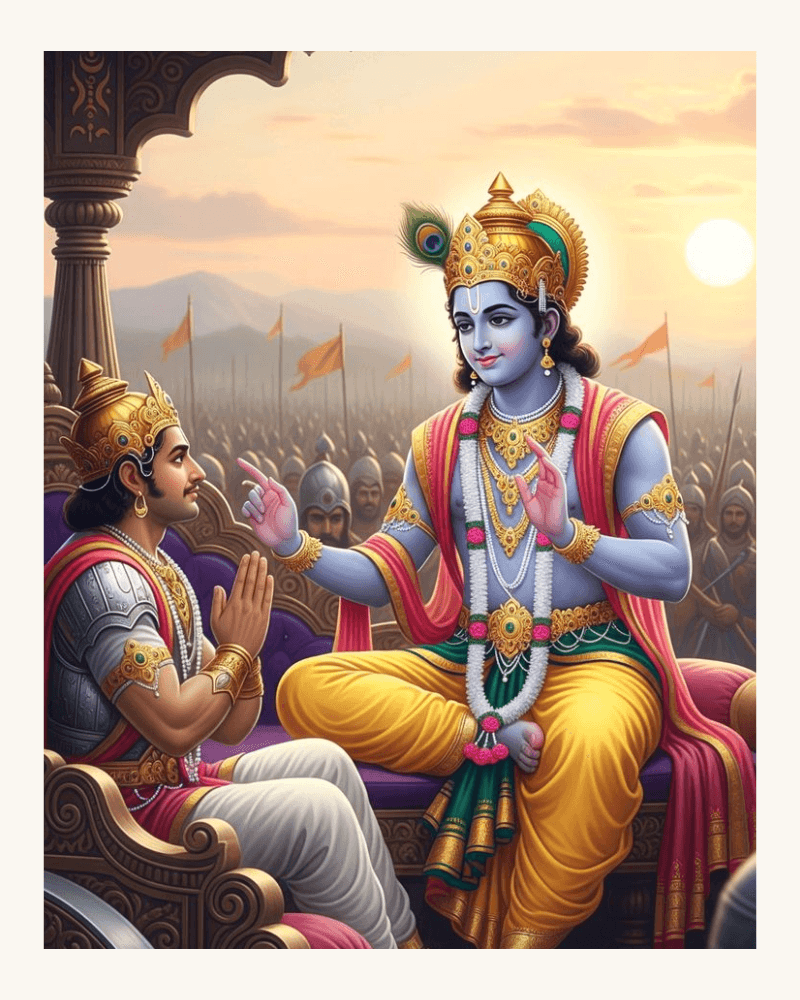
वसुदेवसुतं देवं कंसचाणूरमर्दनम् ।
देवकीपरमानन्दं कृष्णं वन्दे जगद्गुरुम् ॥
vāsudeva-sutaṃ devaṃ kaṃsa-cāṇūra-mardanam |
devakī-paramānandaṃ kṛṣṇaṃ vande jagad-gurum ||
vāsudeva-sutam – the son of Vasudeva; devam – the divine one; kaṃsa-cāṇūra-mardanam – the destroyer of Kaṃsa and Cāṇūra; devakī-parama-ānandam – the one who gave great joy to Devakī; kṛṣṇam – Krishna; vande – I bow to, I worship; jagad-gurum – the teacher of the world.
I bow to Krishna, the divine son of Vasudeva, the destroyer of Kaṃsa and Cāṇūra, the one who brought immense joy to Devakī, and the teacher of the whole world.
Honor Sage Vyāsa and his Ṛṣi Paramparā
व्यासं वशिष्ठनप्तारं शक्तेः पौत्रमकल्मषम् ।
पराशरात्मजं वन्दे शुकतातं तपोनिधिम् ॥
vyāsaṃ vaśiṣṭha-naptāraṃ śakteḥ pautram akalmaṣam |
parāśarātmajaṃ vande śuka-tātaṃ tapo-nidhim ||
vyāsam – Vyāsa; vaśiṣṭha-naptāram – great-grandson of Vaśiṣṭha; śakteḥ pautram – grandson of Śakti; akalmaṣam – pure, without stain; parāśara-ātmajam – son of Parāśara; śuka-tātam – father of Śuka; tapo-nidhim – treasure of tapas, deep penance.
I bow to Vyāsa, the pure sage who is the great-grandson of Vaśiṣṭha, the grandson of Śakti, the son of Parāśara, and the father of Śuka, and who is a great treasurehouse of penance and spiritual strength.
Vyāsa is one of the greatest teachers in India’s tradition. He organized the four Vedas so they could be learned clearly and passed on intact through the oral śrutipāṭha tradition. He composed the Mahābhārata, the longest and one of the most important itihāsas, which includes the Bhagavad Gītā. He also wrote the 18 Purāṇas and taught wisdom to many great students.
Vyāsa’s name means “one who arranges or divides,” because he arranged knowledge so it could be passed on clearly. He appears at important times in many stories to guide kings and rishis. Children can understand him as the wise storyteller and teacher who helps the world learn śraddhā, bhakti, and the meaning of dharma.

Advaita Guru Paraṃparā Stotram
नारायणं पद्मभुवं वसिष्ठं शक्तिं च तत्पुत्रं पराशरं च
व्यासं शुकं गौडपदं महान्तं गोविन्दयोगीन्द्रम् अथास्य शिष्यं ।
श्रीशङ्कराचार्यमथास्य पद्मपादं च हस्तामलकं च शिष्यं
तं तोटकं वार्त्तिककारमन्याञ् अस्मद्गुरून् सन्ततम् आनतोऽस्मि ॥
nārāyaṇaṃ padmabhuvaṃ vaśiṣṭhaṃ śaktiṃ ca tatputraṃ parāśaraṃ ca
vyāsaṃ śukaṃ gauḍapadaṃ mahāntaṃ govinda-yogīndram athāsya śiṣyam |
śrī-śaṅkarācāryam athāsya padmapādaṃ ca hastāmalakaṃ ca śiṣyam
taṃ toṭakaṃ vārttika-kāram anyān asmad-gurūn santatam ānato’smi ||
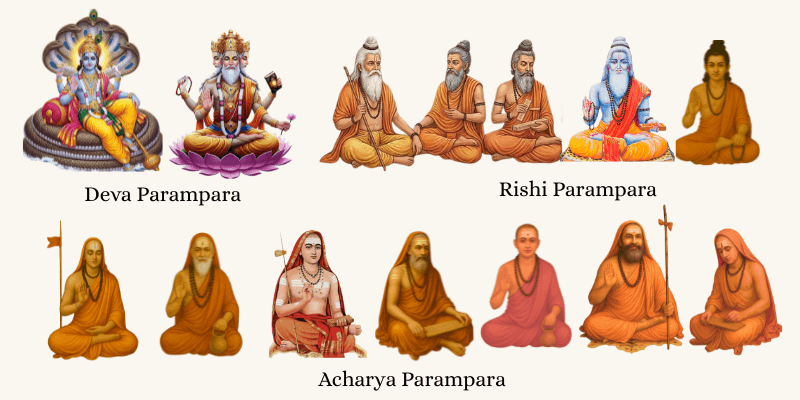
deva-paramparā — nārāyaṇam – Lord Nārāyaṇa, padma-bhuvam – Brahmā, born of the lotus
ṛṣi-paramparā — vaśiṣṭham – Vaśiṣṭha Maharṣi, śaktim – his son Śakti Maharṣi, tat-putram parāśaram – his son Parāśara Maharṣi, vyāsam – his son Maharṣi Veda Vyāsa, śukam – and his son Śuka Maharṣi
ācārya-paramparā (mānava-paramparā) — gauḍapadam mahāntam – the great Gauḍapāda Ācārya, govinda-yogīndram – his student Govinda Bhagavatpāda, śrī-śaṅkarācāryam – his student Ādi Śaṅkara Bhagavatpāda and his four main students - padmapādam – Padmapādācārya, hastāmalakam – Hastāmalakācārya, toṭakam – Toṭakācārya and vārttika-kāram – Suresvarācārya (the one who wrote authoritative vārttikas or commentaries), anyān – the other teachers in the lineage thereafter, asmad-gurūn – including my own teachers, santatam ānataḥ asmi – I bow to them always.
The stotram begins with the Deva Paramparā, invoking Lord Nārāyaṇa and Brahmā. It continues into the Ṛṣi Paramparā, tracing the line of sages from Vaśiṣṭha to Śakti, to Parāśara, to Veda Vyāsa, and then to Śuka Maharṣi — an unbroken father-to-son lineage of great wisdom.
The stotram then moves to the Ācārya Paramparā of Advaita Vedānta: the great Gauḍapāda, his disciple Govinda Bhagavatpāda, and his disciple Ādi Śaṅkara, followed by Śaṅkara’s four principal disciples—Padmapāda, Hastāmalaka, Toṭaka, and Suresvarācārya (the vārttika-kāra). From them arises the full line of Advaita teachers, leading up to one’s own Guru. The śloka expresses continuous devotion to this entire lineage of teachers.
This stotram shows how knowledge is passed carefully from teacher to student across generations. It begins with the divine source or the Gods, then the great sages, and then the human teachers who explain the truth clearly. This lineage includes Ādi Śaṅkara and his main students, who helped spread Advaita Vedānta across India. It is like a chain of light — each teacher carrying the flame of knowledge and passing it down unchanged.
Honor Ādi Śaṅkara, the Treasurehouse of All Scriptural Wisdom
श्रुतिस्मृतिपुराणानाम् आलयं करुणालयम् ।
नमामि भगवत्पादशङ्करं लोकशङ्करम् ॥
śruti-smṛti-purāṇānām ālayaṃ karuṇālayaṃ |
namāmi bhagavat-pāda-śaṅkaraṃ loka-śaṅkaram ||
śruti-smṛti-purāṇānām ālayam – the abode or treasure-house of the teachings of the Śruti, Smṛti, and Purāṇas; karuṇā-ālayam – the abode of compassion; namāmi – I bow to; bhagavat-pāda-śaṅkaram – Śaṅkara, at whose divine feet I bow; loka-śaṅkaram – the one who brings auspiciousness to the world.
I bow to the divine feet of Bhagavān Ādi Śaṅkara, who is the abode of compassion and the treasure-house of the wisdom found in the Śruti, Smṛti, and Purāṇas, and who brings auspiciousness to the entire world.
शङ्कारूपेण मच्चित्तं पङ्की कृतमभूद् यया ।
किङ्करी यस्य सा मायाशङ्कराचार्यमाश्रये ॥
śaṅkā-rūpeṇa mac-cittaṃ paṅkī kṛtam abhūd yayā |
kiṅkarī yasya sā māyā śaṅkarācāryam āśraye ||
śaṅkā-rūpeṇa – in the form of doubts; mac-cittam – my mind; paṅkī-kṛtam – made muddy, confused; abhūt yayā – by what (by whom) it has become; kiṅkarī yasya – for whom Māyā is a servant or attendant; sā māyā – that very Māyā; śaṅkarācāryam āśraye – I take refuge in Śaṅkarācārya.
My mind has been muddied and confused by Māyā appearing as doubts. I seek refuge in Ādi Śaṅkarācārya, to whom even Māyā is but a servant.